
The Myitsone Dam Project: Development Project or Strategy for Territorial Control?
Struggle for political, military, and territorial advantage in Kachin State
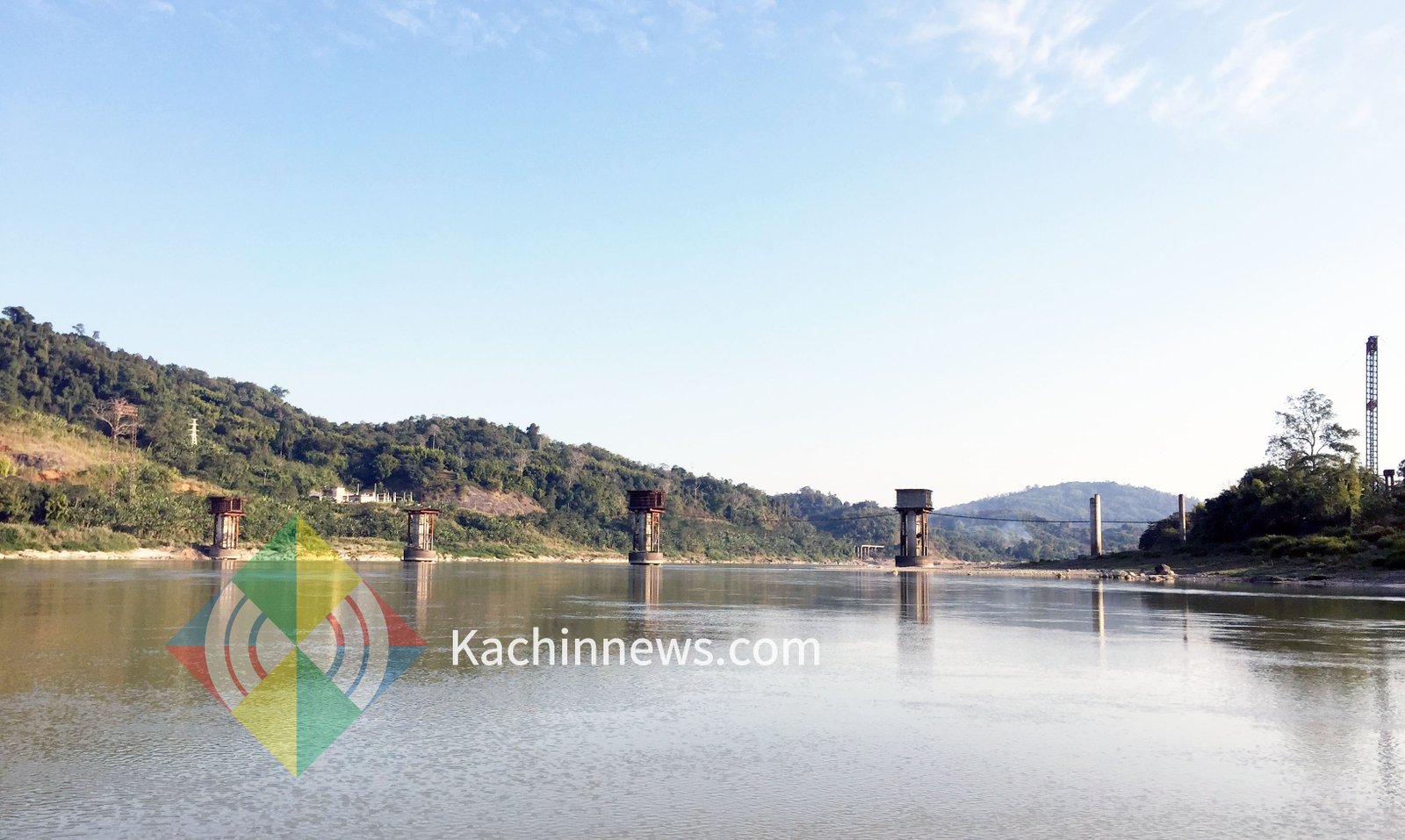
At first glance, the Myitsone Project appears to be a development project designed to generate electricity. But in today’s Myanmar, it is becoming increasingly difficult to view the controversial hydropower project simply as an energy or infrastructure project. The timing of the Myanmar military government’s renewed efforts to restart the project, along with the country’s rapidly changing political and military landscape, raises a much broader question: is Myitsone really about development, or is it also becoming a strategy to reassert political and territorial control?
China Power Investment (CPI) began implementing the project in 2006 with the approval of the Myanmar military government. The project was primarily intended to generate electricity, much of which was expected to be exported to China. But widespread opposition from the Myanmar people and civil society organizations, including those in Kachin State, eventually led President U Thein Sein to suspend the project in 2011 (BBC, 2025).
Fourteen years later, the project is once again being pushed forward. However, this time, the political situation in Myanmar is quite different. . Since the military coup in 2021, armed conflict between the Myanmar military and resistance forces has intensified across the country. The conflict has also transformed the balance of territorial and political power. International actors, particularly China, have played an increasingly important role in shaping this changing environment (Seng Li and Johanna, 2026).
Developments in northern Shan State provide an important example of these changes. Following Operation 1027, launched by the Three Brotherhood Alliance, the Myanmar military lost territorial control of large areas of strategic importance. China’s involvement in the political developments surrounding the conflict has also demonstrated the importance of Beijing’s position in determining the political and military environment along Myanmar’s northern border. When China’s position toward the Myanmar military changed after 2024, the political and military situation in northern Shan State also changed significantly (Seng Li and Johanna, 2026).
A similar transformation has taken place in Kachin State. Alongside Myanmar’s broader Spring Revolution, the Kachin Independence Army (KIA) has expanded its control over towns and villages in eastern Kachin State and gained control over important China–Myanmar border trade gates (Ta-Wei Chu.et.al, 2026). As a result, the Myanmar military and the Kachin Independence Organization (KIO) are increasingly competing not only militarily, but also over territory, administration, border trade, and political authority. In this context, the renewed push for the Myitsone Project needs to be understood as more than a development project.
In 2025, after losing significant territory in Kachin State, the Myanmar military government began renewed efforts to restart the Myitsone hydropower project. This timing is significant and warrants attention. The project is located in an area of considerable strategic importance to the KIO/KIA. As such, its revival could have severe consequences that extend well beyond electricity generation. One possible interpretation is that the project could become a tool for increasing political and economic pressure on the KIO and other revolutionary forces. By using the project to strengthen its relationship with China, the Myanmar military could seek to influence the political and military balance in Kachin State.
In this sense, the Myitsone Project could become part of a broader strategy through which the military government attempts to regain political leverage and weaken the position of the KIO and other resistance forces. Therefore, the project may be presented as “development” while simultaneously producing serious political, military, and territorial consequences.
A Strategic Dilemma for the KIO
The strategic implications become even clearer when the project’s logistical requirements are examined. The Myitsone Project is backed by Chinese investment, particularly the China Power Investment Corporation (SPIC). If construction resumes, workers, heavy machinery, and other equipment would need to be transported to Kachin State from China.
Currently, the main obstacle is that important border crossings are under KIO control, creating a difficult political dilemma for the KIO. If the KIO allows project-related personnel and materials to pass through border crossings under its control, it could face criticism from local Kachin communities and people across Myanmar who have historically opposed the Myitsone Project. However, if it refuses to allow the movement of materials, it could face political and economic pressure from China.
Either decision carries significant political consequences. The Myitsone Project could place the KIO in a difficult position, forcing it to navigate between its relationships with China and the communities and political forces that oppose the project, respectively. In this way, the project could become a source of political pressure on the KIO.
The Territorial Consequences of the Dam
The geographical location of the proposed dam is equally important. If the Myitsone Project is implemented, approximately 65 villages, including 2,600 households and around 12,000 people would reportedly have to be relocated (Kaiwen Yao and Aung Tun Lin, 2024). The area upstream of Myitsone, locally known as the Triangle Area, is largely controlled by KIO/A Brigade 1. Accordingly, the construction of the dam would not simply transform the physical landscape, but it could also transform the political geography of an area under KIO/A control. If large numbers of villages are inundated and communities are relocated, then KIO/A forces and their local social base could also be affected.
This could produce a new intensive military and political confrontation. If the KIO/A opposes the relocation of its forces and communities, the project could become another source of direct conflict between KIO/A and the Myanmar military. But there is another possibility that should be taken into account. Through Chinese political pressure, or the presence of Chinese security forces, such as in Kyaukphyu in Rakhine State (BBC Burmese News, 2025), or the physical consequences of the project, the Myanmar military could potentially alter the territorial situation without having to remove KIA forces through direct military confrontation. In other words, the construction of the dam could contribute to changing the political geography of the area.
The Myanmar military has previously used development projects in conflict-affected areas as means of territorial control and counterinsurgency. In their research on “ceasefire capitalism,” and “land grabbing as a process of state-building in Kachin and northern Shan State”, Kevin Woods (2011) and L. KumJa Htung (2015) examined how, during Myanmar’s previous ceasefire period, investments in rubber, banana, and cassava plantations and other development projects were linked to broader processes of territorial control and counterinsurgency. Specifically, they focused on projects in areas such as the Ledo Road, the Hukawng Valley, and Waingmaw and Bhamaw. Development, therefore, has never been entirely separate from politics in Myanmar’s borderlands.
A road, plantation, mine, or hydropower project can generate economic benefits. However, these developments can also change who controls land, who has access to resources, where communities are able to live, and which political authority is able to exercise power over a particular territory. The Myitsone Project needs to be considered within the context of Kachin political history. The important question is not whether the project is officially described as “development.”, but rather what specific political and territorial consequences may accompany that development.
Dividing Opposition to the Myitsone Project
There is another important dimension to the renewed effort to restart the project: the politics of public opinion. The Myitsone Project was suspended in 2011 following strong opposition from both local Kachin communities and people across Myanmar. The movement against the project brought together people from different political, social, and civil society backgrounds.
Today, however, that opposition is becoming increasingly divided. To facilitate the revival of the project, the Kachin State government established the Local Support Committee for the Myitsone, Upper and Lower Ayeyarwady Hydropower Projects. Since early 2026, the committee has conducted public meetings in wards across Myitkyina under the guise of ‘public consultation’ on the Myitsone Project.
These meetings have generated debate and caused increasing concern among members of the public. On the ground and across social media, people have begun criticizing and accusing one another over their positions on the project. Groups and individuals who once stood together in opposition to Myitsone are now increasingly divided. Whether this division is being deliberately engineered or emerging from changing political and economic circumstances requires further investigation. Regardless, the effect is clear: the once broad and relatively unified opposition to the project is becoming more fragmented.
The establishment of the Local Support Committee should be examined not only as a mechanism for public consultation, but also as a strategy to divide people who are against the Myitsone dam project. For example, Mr. Naw Htoi and Mr. Jan Khone, both members of the committee who are now leading the promotion of the Myitsone Project, were previously opponents of the project. Today, both have become critics of those who continue to oppose it.
This change illustrates how the previous opponents of the Myitsone dam project are now working against each other, following the establishment of the Local Support Committee for the Myitsone, Upper and Lower Ayeyarwady Hydropower Projects.
Similarly, in Kyaukphyu, Rakhine State, Chinese investment has played a major role in the development of the deep-sea port project, and the Chinese investment company (CITIC) helped establish and support a civil society organization known as the Kyaukphyu Socio-Economic Development and Assistance Association (KSEDAA). KSEDAA has worked with CITIC on mobile medical services and development activities (Ta-Wei Chu et.al, 2024).
Research on this organization has raised concerns that its services have primarily benefited people who support the project, while those who oppose the project have faced selective engagment or marginalization (Ta-Wei Chu et.al, 2024). The Kyaukphyu case demonstrates why community development activities surrounding large infrastructure projects need to be examined carefully. Providing medical services, development assistance, or other forms of community support can genuinely help address local needs. But such activities can also become part of a broader effort to establish public legitimacy for controversial projects.
As such, the same question needs to be asked about Myitsone: is community consultation intended to give local people a genuine voice in the project, or is it primarily intended to gain acceptance for a decision that has already been made?
The politics of public opinion surrounding the Myitsone Project also extend well beyond the relationship between project supporters and opponents. The Myanmar military regime’s approach can be understood in relation to broader efforts that may contribute to divisions within and among local communities, and between local communities and civil society organizations. This dimension is particularly important because the environmental and social consequences of the project will certainly affect communities beyond the immediate project area.
As the Myanmar military regime began preparing to restart the Myitsone Dam Project, some local residents and business operators in the surrounding area were allowed to engage in gold mining (KNG, 2026). At the same time, these activities and the associated environmental damage have been used to portray some local residents and business operators as contributing to the destruction of the Myitsone area. This creates a complicated political dynamic in which local people can simultaneously be affected by environmental degradation, and also be represented as the responsible parties for environmental damage.
The committee has also presented the revival of the Myitsone Project in terms of protecting the river. During a DVB debate session, a member of the Local Support Committee for the Myitsone, Upper and Lower Ayeyarwady Hydropower Projects argued that gold mining was causing major damage to the Ayeyarwady river system, and framed the implementation of the Myitsone Project as a possible means of preventing further degradation and protecting the river (DVB, 2026).
This framing is significant because it shifts the debate from whether the Myitsone Project should proceed, to whether the project can be presented as a solution to other forms of environmental degradation. According to this narrative, gold mining is associated with environmental destruction, while the hydropower project is presented as a mechanism for protecting the river.
Therefore, debates surrounding the Myitsone Project should not be understood simply as a division between supporters and opponents of the dam. Rather, they should also be examined as part of broader political and power relations that shape public opinion, reorganize alliances, and contribute to divisions within and among local communities, and among civil society organizations.
Space for Opposition
The wider political environment makes the question of space for opposition even more pressing. Since the 2021 coup, the Myanmar military government has severely restricted freedom of expression and freedom of the press (Pen International, 2026). Civil society organizations are also operating under increasing political pressure and with fewer financial resources (United Nations, 2026).
The Myanmar government has also threatened legal action against people who oppose the Myitsone Project (Network Media Group, 2025). Under these conditions, it is increasingly difficult for civil society organizations and local communities to independently monitor, investigate, and challenge large-scale development projects.
The power imbalance between project supporters and opponents is profound. Government institutions and companies have access to administrative authority, financial resources, and institutional platforms. In contrast, local communities and civil society organizations face restrictions, insecurity, and declining resources. This makes genuine public participation particularly difficult.
Attendance at a consultation meeting, in and of itself, does not demonstrate public consent. Genuine consultation requires freedom to disagree, access to independent information, and a meaningful opportunity for affected communities to influence decisions.
This opinion piece was written by Ma Dee, who is a Kachin researcher.
References
BBC News Burmese. (2026). မြစ်ဆုံစီမံကိန်းကို စာချုပ်ပြင်ပြီး ပြန်အသက်သွင်းဖို့ စစ်ကော်မရှင်ကြိုးပမ်း. BBC News. https://www.bbc.com/burmese/articles/c3e0x17jj97o .
BBC News Burmese. (2025, March 10). ကျောက်ဖြူမှာ တရုတ်လုံခြုံရေးတွေရောက်. BBC News. BBC Burmese article
Chu, T. W., Jonathan, S., & Lynn, K. (2024). The business practices of a Chinese state-owned enterprise in Myanmar’s Kyaukphyu special economic zone: Perspectives of local non-state stakeholders. Issues & Studies, 60(04), 2450016.
DVB TV News. (2026). မြစ်ဆုံစီမံကိန်းဘယ်သူ့အတွက်လဲ [Video].YouTube. https://www.youtube.com/watch?v=nU_pa3quoJM
Htung, L. G. J. (2018). Land grabbing as a process of state-building in Kachin Areas, North Shan State, Myanmar. Chiang Mai: Chiang Mai University Press.
Kachin News Group. (2026). ကြည့်ရက်စရာတောင် မရှိတော့တဲ့ မြစ်ဆုံ အခြေအနေ [Video]. Facebook. https://web.facebook.com/reel/1614115920089672
Network Media Group. (2025). မြစ်ဆုံစီမံကိန်း ဝေဖန် ကန့်ကွက်သူကို အရေးယူမည်ဟု စစ်ကော်မရှင် ခြိမ်းခြောက် [Facebook post]. Facebook. Network Media Group Facebook post
PEN International. (2026, February 2). Myanmar: Five years after the coup, expression remains under attack. PEN International
Seng Li & Sydow, J. (2026, May 1). Myanmar: A hidden source of China’s most critical minerals. D+C Development and Cooperation. https://www.dandc.eu/en/article/myanmar-rare-earths-kachin-china
Ta-Wei Chu.et.al, (2026) rare earths mining after the coup in Myanmar. (Internal report).
United Nations. (2026, June). Myanmar: Aid decline compounds suffering amid ongoing military attacks. UN News. https://news.un.org/en/story/2026/06/1167777
Woods, K. (2011). Ceasefire capitalism: military–private partnerships, resource concessions and military–state building in the Burma–China borderlands. Journal of Peasant Studies, 38(4), 747-770.
Yao, K., & Aung Tun Lin, A. (2024). A study on involuntary resettlement outcomes of Myitsone, Upper Paunglaung and Tha Htay hydropower projects in Myanmar. International Journal of Environmental Sciences & Natural Resources, 33(2), 556361. https://doi.org/10.19080/IJESNR.2024.33.556361

