
Looking beyond extraction-centred governance approaches in Northern Myanmar.
Northern Myanmar, particularly Kachin State, has increasingly emerged as one of Southeast Asia’s most environmentally fragile yet strategically significant regions. Rich in jade, gold, timber, and critical minerals such as rare earth elements essential to global technology industries, modern weapons manufacturing, and the green-energy transition, the region now stands at the intersection of extraction, conflict, governance fragmentation, and socioeconomic vulnerability. While resource extraction has generated economic opportunities and political leverage within the region, the environmental and social consequences are increasingly borne by local communities whose livelihoods and ecosystems depend upon the long-term sustainability of their lands, rivers, and forests.
The environmental crisis developing across northern Myanmar is not simply the result of extraction itself, but of widening gaps between formal environmental policy and practical governance realities on the ground. Environmental conservation laws and regulatory mechanisms formally exist within the governance framework. However, implementation in conflict-affected regions remains constrained by prolonged instability, fragmented territorial authority, weak institutional oversight, informal extraction economies, and cross-border commercial pressures.
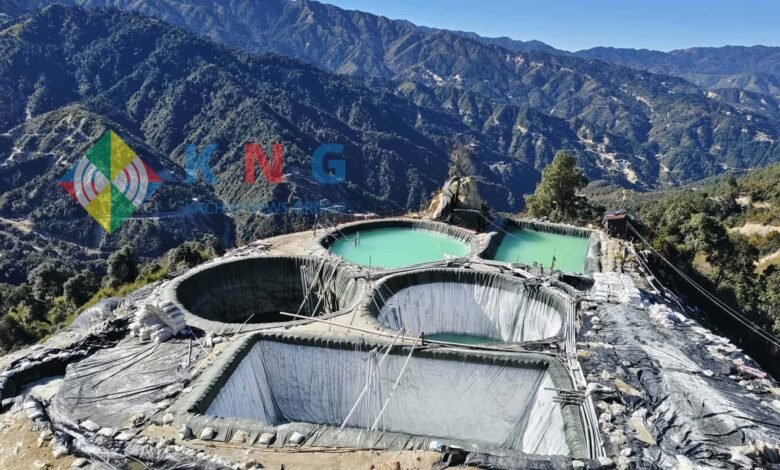
It has become particularly visible in the rapid expansion of rare earth mining activities along the China–Myanmar border following the political instability after 2021. International environmental investigations, local monitoring groups, and recent field-based research projects have documented increasing deforestation, land degradation, chemical leaching, and water contamination associated with mining expansion in Kachin State. According to environmental monitoring organisations such as Global Forest Watch, Myanmar has experienced significant forest cover decline over recent decades, particularly in extraction-heavy border regions. Many extraction activities for these rare earths reportedly rely on open-pit mining and in-situ leaching methods, both of which create severe environmental risks when conducted without effective safeguards, monitoring systems, and rehabilitation mechanisms. Open-pit extraction contributes to deforestation, soil erosion, and habitat destruction, while in-situ leaching techniques may lead to groundwater contamination, soil pollution, and long-term ecological instability.
Yet environmental degradation in northern Myanmar cannot be understood solely as an environmental issue in isolation. It is deeply connected to broader political, economic, and governance realities shaped by conflict, economic survival, regional trade dependency, and fragmented authority structures. Simplistic narratives assigning environmental destruction entirely to a single actor fail to capture the structural complexities operating within these extraction zones. In practice, environmental outcomes are shaped by overlapping systems of governance involving the previous Myanmar governance policies, the current Kachin Independent Organisation’s policies on rare earth mining, border trade networks, business actors, and foreign economic demand.
The Myanmar government’s approach toward natural resource governance has historically remained centralised and revenue-oriented, with natural resources functioning as strategic economic assets tied to broader political and security objectives. Although environmental regulations formally exist, effective implementation capacity in conflict-affected regions remains highly limited. Environmental impact assessments are inconsistently enforced, while local communities often possess little meaningful participation in decisions involving land use, extraction licensing, or environmental protection. As a result, formal policy objectives frequently remain weak due to local implementation realities. The environmental consequences associated with rare earth mining in northern Myanmar can be traced back to the period of administration under the New Democratic Army–Kachin (NDA-K), which maintained close ties with the Myanmar military. During this period, environmental degradation reportedly intensified, while access to affected mining areas and reliable information concerning extraction activities remained severely restricted.
Since gaining greater control over many rare earth mining areas after 2024, the Kachin Independence Organisation (KIO) has reportedly begun taking a more active administrative role regarding extraction governance and environmental regulation. According to the KNG News interview sources, a rare earth extraction regulatory framework was reportedly introduced in early 2026 to establish rules and management systems for mining activities in areas under KIO administration. However, despite these developments, major challenges remain regarding implementation, enforcement capacity, environmental monitoring, and effective administration on the ground. Many local communities continue to express concerns regarding limited consultation by the extraction companies, insufficient environmental protections, and unequal economic benefit distribution from extraction activities. According to local observations and interview-based perspectives, economic opportunities linked to rare earth extraction often benefit only a relatively small number of actors possessing business connections, language advantages, or direct communication channels with mining operators and external business networks. Meanwhile, many local communities continue to absorb the environmental and social costs without receiving proportional benefits. According to ISP-Myanmar, at least 370 mining sites and approximately 2,700 extraction pits have been identified across the townships of Chipwi Township and Momauk Township in Kachin State. Among these, Chipwi Township accounts for the overwhelming majority, containing an estimated 350 mining sites and 2,500 pits.
At the same time, local governing authorities face significant governance constraints. Governing institutions administering in these conflict-affected territories must simultaneously manage security pressures, local administration, humanitarian needs, economic financing, and public expectations. Under such conditions, environmental protection frequently becomes secondary to immediate political and economic survival priorities. Resource extraction, therefore, becomes embedded within wider conflict-era economic systems rather than functioning simply as ordinary commercial activity.
The environmental impacts themselves are becoming increasingly difficult to ignore. Communities near extraction zones have reported declining water quality, unstable agricultural conditions, reduced fish populations, and growing concerns regarding chemical contamination linked to mining runoff and waste disposal practices. Rivers and waterways flowing through extraction regions carry environmental consequences beyond the immediate mining sites themselves, affecting downstream farms, fisheries, livestock systems, and broader ecological networks. Northern Myanmar’s river systems are not isolated local waterways but interconnected ecological lifelines extending across wider regions of Myanmar and neighbouring countries. Pollution entering upstream extraction zones therefore risks creating broader regional environmental consequences affecting agriculture, biodiversity, ecosystems, and local livelihoods far beyond the mining areas themselves. This has become increasingly concerning for communities relying upon river systems for irrigation, drinking water, fisheries, and small-scale agricultural livelihoods. In many communities across Kachin State, traditional livelihoods remain heavily dependent upon shifting cultivation, agriculture, and small-scale local economies. However, environmental degradation linked to extraction activities has increasingly threatened food security, plantation systems, and long-term agricultural stability. Soil contamination, polluted water sources, and ecological destruction have reduced agricultural productivity in several affected regions, making it increasingly difficult for local communities to maintain traditional livelihoods and economic resilience.
Beyond environmental degradation itself, extraction economies are also reshaping local social structures and community well-being. Reports and local concerns indicate growing labour vulnerability among workers in extraction zones, including exploitative labour conditions, wage inequality, unsafe working environments for young women, and social instability linked to economic hardship and limited employment alternatives. These conditions have generated broader concerns regarding social protection, labour safeguards, and long-term community stability in extraction-affected areas.
One of the most significant governance gaps remains the lack of policy enforcement, administrative accountability, and meaningful community participation in environmental decision-making processes. Many communities directly affected by extraction projects remain insufficiently informed about the long-term environmental, health, and social impacts associated with rare earth extraction activities. Public awareness regarding chemical contamination, ecological degradation, groundwater risks, and long-term environmental consequences remains limited in many mining-affected regions. This reflects not only a governance challenge but also a public information and environmental education gap.
Addressing these challenges requires moving beyond extraction-centred governance approaches towards transparent, participatory, environmentally accountable policy frameworks and enforcement mechanisms. One important policy priority involves strengthening environmental monitoring and waste management systems in extraction areas. Current oversight mechanisms remain insufficient in regulating mining runoff, chemical waste disposal, sediment control, and river protection. Stronger safeguards and monitoring systems are therefore necessary to prevent irreversible ecological damage affecting both local and downstream communities. Environmental rehabilitation policies must also become a more important component of future governance strategies. Extraction sites experiencing severe land degradation, deforestation, and ecological disruption should be incorporated into long-term rehabilitation and restoration planning. Reforestation efforts, ecological recovery programs, river protection initiatives, and sustainable land management strategies could help reduce long-term environmental decline while strengthening regional ecological resilience.
Equally important is the expansion of community-based environmental oversight mechanisms. Local communities often possess the strongest understanding of environmental changes occurring within their own ecosystems. Greater local participation in environmental monitoring, consultation processes, and ecological reporting systems could improve accountability while strengthening public trust and cooperation in environmental management efforts. Environmental licensing systems, extraction regulations, and ecological monitoring processes should include clearer reporting, broader public access to information, and more inclusive consultation structures that incorporate local concerns into policy planning. The implementation of Free, Prior, and Informed Consent (FPIC), recognised under international frameworks and United Nations standards, could also provide stronger protections for indigenous and local communities by ensuring that extraction activities involve meaningful consultation and informed participation before projects are initiated.
Responsibility for addressing the environmental impacts of rare earth mining lies not only with local governing authorities but also with mining companies that are expected to comply with environmental regulations and operational standards. Furthermore, given China’s dominant position in the global rare earth supply chain, the Chinese government should strengthen and incorporate environmental protection measures within its overseas rare earth investment and mining policies.
The environmental crisis in northern Myanmar reflects deeper tensions between economic survival, governance fragmentation, ecological sustainability, and long-term regional stability. For many local communities, extraction economies simultaneously represent both economic necessity and environmental threat. Effective governance must therefore move beyond short-term extraction-centred approaches toward systems that balance environmental protection, ecological accountability, community welfare, and long-term sustainability. Around 2010, China introduced significantly stricter environmental regulations and enforcement mechanisms for Ecological restoration concerning rare earth extraction, following severe environmental damage caused by earlier periods of intensive mining activity. China’s own experience demonstrates the long-term environmental costs of poorly regulated extraction systems and highlights the importance of strong environmental oversight, effective monitoring mechanisms, and rehabilitation planning in the management of critical mineral industries.
The future of northern Myanmar will depend not only on political stability itself, but also on whether environmental governance can evolve beyond conflict-era extraction toward more sustainable and participatory development frameworks. Without meaningful reforms addressing environmental accountability, ecological rehabilitation, waste management, public participation, and community protections, environmental degradation risks becoming not only an ecological crisis but also a long-term obstacle to sustainable peace and future regional development for generations to come.
Bibliography
Auty, R. M. (1993). Sustaining development in mineral economies: The resource curse thesis. Routledge.
EarthRights International. (2025). Kachin: A sacrifice zone for the green transition. https://earthrights.org/
Food and Agriculture Organization. (2020). Global forest resources assessment 2020: Myanmar country report. FAO. https://www.fao.org/
Global Witness. (2015). Jade: Myanmar’s “big state secret”. Global Witness. https://www.globalwitness.org/
Heinrich Böll Stiftung & Shanan Foundation. (2025). Governance of rare earth mining by the Kachin Independence Organization (KIO). Heinrich Böll Stiftung. https://www.boell.de/
International Crisis Group. (2021). Taking aim at the Tataw: The new armed resistance to Myanmar’s coup. International Crisis Group. https://www.crisisgroup.org/
ISP-Myanmar. (2025). State of Myanmar report 2025–2026. ISP-Myanmar. https://ispmyanmar.com/
Mahidol Migration Center. (2025). Rare earth mining and community transformation in Kachin State (Policy Brief). Mahidol University. https://mahidolmigrationcenter.com/
Mongabay. (2021, June 10). Myanmar junta’s growing reliance on extractives for cash raises concerns. https://news.mongabay.com/
Robbins, P. (2020). Political ecology: A critical introduction (3rd ed.). Wiley-Blackwell.
Reuters. (2024, October 23). Armed group says it takes control of Myanmar rare earth mining hub. Reuters. https://www.reuters.com/
Schlosberg, D. (2007). Defining environmental justice: Theories, movements, and nature. Oxford University Press.
Stimson Center. (2025). Rare earths and realpolitik: The future of mediation in Myanmar. Stimson Center. https://www.stimson.org/
Transnational Institute. (2021). Kachin’s contested landscapes. Transnational Institute. https://www.tni.org/
United Nations Development Programme. (2023). Myanmar human development report. UNDP Myanmar. https://www.undp.org/
University of Warwick. (2024). Addressing the environmental impacts of rare earth mining in Kachin State, Myanmar. University of Warwick. https://warwick.ac.uk/
University of Warwick. (2024). Rare earth mining in Kachin State, Myanmar: The impacts of rare earth mining on livelihoods and local communities. University of Warwick. https://warwick.ac.uk/
Woods, K. (2011). Ceasefire capitalism: Military–private partnerships, resource concessions and military-state building in the Burma–China borderlands. Journal of Peasant Studies, 38(4), 747–770. https://doi.org/10.1080/03066150.2011.607699
World Bank. (2019). Myanmar country environmental analysis. World Bank Group. https://www.worldbank.org/
Yale Environment 360. (2024). Illicit rare earth mining in Myanmar is taking a heavy toll on the environment. https://e360.yale.edu/

