Workers Call for Action Over Wage Exploitation in Rare Earth Mining Sites
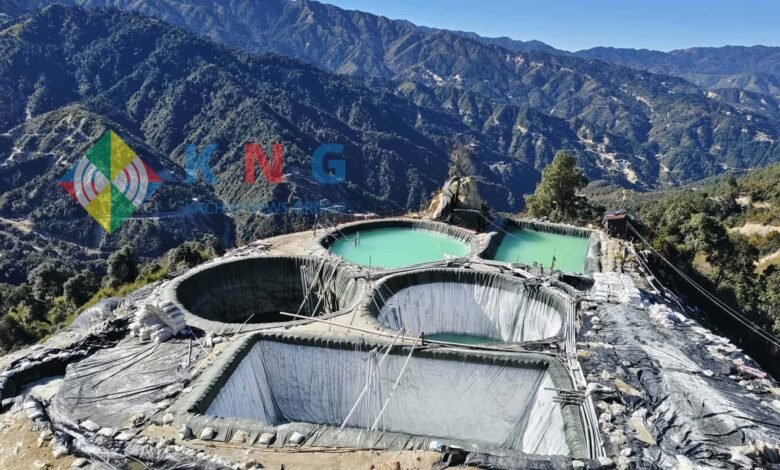
Workers at rare earth mining sites located between Mai Ja Yang and Nkhaung Pa villages are calling for solutions to address ongoing wage exploitation and irregular salary payments.
Although workers at these sites are officially set to earn between 2,600 and 3,000 Chinese Yuan per month, reports indicate that they often have to wait nearly five months to receive their wages.
A female worker from Mai Ja Yang said, “Because wages are not paid on time, we have to borrow money just to survive. Middlemen always say the Chinese employers have not paid yet. We don’t speak Chinese, so we cannot directly ask them. Sometimes we are paid only once every four months, and even then, not in full. Even if the agreed salary is 3,000 Yuan per month, they only give about 1,000 Yuan for three or four months at a time. It is very difficult for women like us who have children at home.”
Communication between Chinese companies and workers is mainly via interpreters or local managers at mining sites. However, some Chinese-speaking intermediaries reportedly exploit workers as well.
Some workers previously filed complaints to the KIO office in Mai Ja Yang in 2025, but to date KIO officials have not provided an effective solution.
A worker explained: “It was very difficult to get our wages, so we went to complain to the KIO office. But they responded by saying, ‘Did we force you to work there?’ Because of this, we feel helpless and cannot rely on anyone for support.”
Similar wage exploitation has also been reported among workers involved in road construction projects run by Chinese companies in the same area.
When asked about the issue, KIO Information Officer Colonel Naw Bu stated:
“The KIO’s policy is to ensure that people are not harmed and can sustain their livelihoods. Workers and companies enter agreements voluntarily. If wages are not paid as agreed, workers have the right to report it. However, we have not received clear information at the central level regarding the complaints from Mai Ja Yang. If people are truly facing hardship, they should come forward and report it to the KIO so that it can be addressed.”
The KIO also stated that it has urged companies to avoid causing harm to local communities.
In Pang Wa area, workers report that people with closer ties to Chinese companies often oppress fellow workers. Chinese-speaking workers in intermediary positions sometimes abuse their authority and treat workers unfairly.
A worker from Pangwa town said: “Some labor leaders strongly side with the Chinese and exploit workers. They are difficult to deal with and show little respect for fellow Myanmar workers.”
As of March 15, workers at some rare earth mining sites in Chipwi and Pangwa have still not received their January wages.
All rare earth mining operations in Kachin State are controlled by the KIO. Recently, companies have been reducing wages, particularly at sites between Mai Ja Yang and NKhaung Pa.
Rare earth mining sites have significantly expanded across border areas including Chipwi, Pangwa, and Momauk region up to 2025.
According to a May 2024 Global Witness report, the number of rare earth mining sites in Momauk increased from 9 in 2021 to more than 40 by the end of 2023.
Currently, the KIO taxes rare earth exports at 35,000 Chinese yuan per ton in addition to imposing a tax of two out of every 10 tons of rare earths crossing the border. This rate indicates that the KIO may be selling rare earths directly to China. Notably, some sources claim that as the KIO raises taxes, mine workers’ wages are lower.
A Chinese rare earth industry association, Shitu Shewei, Shewei Huisheng, reportedly mediates disputes between local workers and Chinese business operators.
The association is based in Tengchong, Yunnan Province, and allegedly has close ties with Chinese-owned companies.
According to ISP Myanmar, there are currently at least 370 rare earth mining sites and over 2,700 leaching pools in Chipwi and Momauk townships; more than 240 sites emerged after the military coup.
Myanmar’s rare earth production reached approximately 5,000 tons in 2018, 25,000 tons in 2019, 30,000 tons in 2020, and 26,000 tons in 2021, making it the world’s third-largest producer for four consecutive years, according to the U.S. Geological Survey.
Most of Myanmar’s rare earth output—around 26,000 metric tons—is primarily purchased by China.